2 Chronicles

Temple History

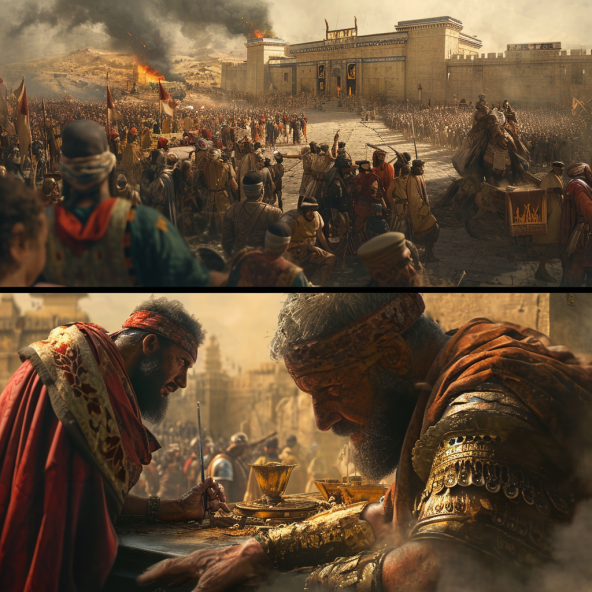
The Book of 2 Chronicles is the second book of the Books of Chronicles in the Hebrew Bible and the Christian Old Testament. It is a continuation of the history of the Israelites, beginning with the reign of Solomon and continuing through the fall of the Kingdom of Judah to the Babylonians. The book includes stories of the kings of Judah, including both the good kings who followed God's commands and the bad kings who turned away from God. It also includes stories of the prophets and other leaders who served as advisers and counselors to the kings. The book ends with the fall of the Kingdom of Judah to the Babylonians and the exile of the Israelites to Babylon. Key figures in the book of 2 Chronicles include Solomon, Rehoboam, Asa, Jehoshaphat, Hezekiah, and Zedekiah. The book also mentions various other individuals, such as the prophets and the priests, who served as advisers and leaders for the kings. The book also emphasizes the role of God in the history of the Israelites and the importance of obedience to his commands.

Commentary

36 chapters
The Book of 2 Chronicles is the second book of the Books of Chronicles in the Hebrew Bible and the Christian Old Testament. It is a continuation of the history of the Israelites, beginning with the reign of Solomon and continuing through the fall of the Kingdom of Judah to the Babylonians. The book includes stories of the kings of Judah, including both the good kings who followed God's commands and the bad kings who turned away from God. It also includes stories of the prophets and other leaders who served as advisers and counselors to the kings. The book ends with the fall of the Kingdom of Judah to the Babylonians and the exile of the Israelites to Babylon. Key figures in the book of 2 Chronicles include Solomon, Rehoboam, Asa, Jehoshaphat, Hezekiah, and Zedekiah. The book also mentions various other individuals, such as the prophets and the priests, who served as advisers and leaders for the kings. The book also emphasizes the role of God in the history of the Israelites and the importance of obedience to his commands.

Biblical figures

Key figures in 2 Chronicles

GodG

God

Supreme Being

IsraelI

Israel

King

DavidD

David

Prophet, King of Israel

MosesM

Moses

Prophet, biblical judge

JudahJ

Judah

Tribal leader

JerusalemJ

Jerusalem

Capital

EgyptE

Egypt

Pharaoh

DanD

Dan

Judge

LeviL

Levi

Priest

AaronA

Aaron

High Priest of Israel

SolomonS

Solomon

Prophet, King of Israel

P

Philistine

Enemy

PharaohP

Pharaoh

Pharaoh

BenB

Ben

Son of Jacob.

AbrahamA

Abraham

Prophet, patriarch

J

Jordan

Baptist

EphraimE

Ephraim

Tribe Leader

BenjaminB

Benjamin

Son of Jacob.

EveE

Eve

Mother of all humankind

Z

Zion

No official position held by the figure Zion.

S

Syria

Ruler

JeremiahJ

Jeremiah

Prophet, Cohen

Manasseh son of JacobM

Manasseh son of Jacob

SamuelS

Samuel

Prophet, biblical judge

A

Assyria

King of Assyria

IsaacI

Isaac

Prophet, patriarch

H

Hezekiah

King of Judah

A

Ammon

Servant

S

Samaria

King of Israel

A

Absalom

King

E

Edom

Chief of Edom.

G

Gad

prophet

J

Joel

Prophet

JehoshaphatJ

Jehoshaphat

King of Judah

ShemS

Shem

Son

R

Ram

Judge

ElishaE

Elisha

Prophet

H

Hebron

City

ElijahE

Elijah

Prophet

B

Bethel

priest

ZedekiahZ

Zedekiah

King of Judah

D

Damascus

Governor of Damascus

H

Hanan

High Priest

B

Bethlehem

Town.

J

Josiah

King of Judah

SimeonS

Simeon

Priest

Z

Zadok

High Priest of Israel

IshmaelI

Ishmael

Son of Abraham

S

Shema

Leader

N

Naphtali

Tribal leader

A

Azariah

High Priest

J

Jezreel

The position held by Jezreel was "a city in Israel."

J

Joash

King

N

Nathan

Prophet

J

Jesse

Father of King David

Z

Zebulun

.

A

Asher

Tribal leader.

I

Issachar

Tribal leader.

B

Benaiah

Commander of King David's bodyguard

S

Sheba

Queen

S

Shemaiah

Prophet

S

Shilo

Religious Leader

A

Amaziah

King

H

Hanani

Messenger

M

Merari

Levite

ZechariahZ

Zechariah

Priest

A

Ahaziah

King of Judah

P

Persia

King

R

Ramah

Prophet.

A

Asaph

Singer

H

Hilkiah

High Priest of Israel

C

Carmel

Prophet.

O

Obed

Son of Ruth and Boaz.

A

Amon

King

I

Isaiah

Prophet

MicahM

Micah

Prophet

G

Gershon

Musician

J

Jeshua

High Priest

S

Shaphan

Scribe

H

Hananiah

prophet

J

Joram

King

J

Johanan

High Priest of Israel

U

Uzziah

King of Judah

A

Adonijah

Rebel leader.

M

Maaseiah

Governor

AbelA

Abel

Shepherd

BoazB

Boaz

Kinsman redeemer

J

Jotham

King of Judah

Z

Zerah

Chieftain

C

Cyrus

King

H

Hazael

King

Z

Zeba

Army commander

A

Amasa

Commander of the army

E

Eliab

Eliab's positionheld would be "brother of David."

ElkanahE

Elkanah

Priest

M

Mattan

High Priest

A

Abijah

King of Judah

A

Ahijah

High Priest of Israel

N

Nethaniah

Captain

O

Obadiah

Governor

A

Arabia

Queen

A

Asahel

Commander of the Army

J

Jehiel

Head of the Levites

M

Micaiah

Prophet

O

Omri

King of Israel

U

Uzziel

Leader.

A

Athaliah

Queen regnant, King of Judah

E

Elishama

Leader

H

Horeb

Mountain

A

Amariah

High Priest

H

Heman

Singer

M

Mattaniah

High Priest

E

Eliakim

Chief steward

E

Eliezer

Servant

M

Michael

Archangel

I

Iddo

Priest

A

Amoz

Prophet

O

Ophir

King of Ophir

J

Joah

Secretary

O

Orna

Captain

J

Jeiel

Singer

K

Kidron

Judge

E

Eliel

Priest.

A

Adaiah

Priest

BezaleelB

Bezaleel

Master Craftsman

J

Jachin

High Priest

Z

Zebadiah

Priest

A

Abdon

Judge

M

Mareshah

Governor

Z

Zorah

Judge

A

Aijalon

Judge

M

Michaiah

Prophet.

A

Abihail

Father of Esther

A

Asaiah

Commander of the army.

B

Bera

King

J

Jahaziel

Prophet

N

Naamah

T

Trea

E

Eliada

U

Uriel

A

Ajalon

Judge

T

Tikva

T

Tobijah

Z

Ziza

A

Azaliah

H

Huldah

J

Jerusha

M

Moriah

S

Shama

Z

Zibiah

A

Adoraim

E

Ephrain

S

Shamariah

AhabA

Ahab

King of Israel

B

Baasha

King of Israel

E

Eli

High Priest of Israel, biblical judge

HamH

Ham

J

Jehoahaz

King of Judah, King of Israel

J

Jehoiada

High Priest of Israel

JehoiakimJ

Jehoiakim

King of Judah

M

Moab

NebuchadnezzarN

Nebuchadnezzar

King of Babylon

RehoboamR

Rehoboam

King of Judah, King of Israel

S

Shallum

High Priest of Israel

S

Shimea

S

Shishak

Pharaoh

Chapters
Solomon's Wisdom and Wealth

Solomon's Wisdom and Wealth

2 Chronicles 1

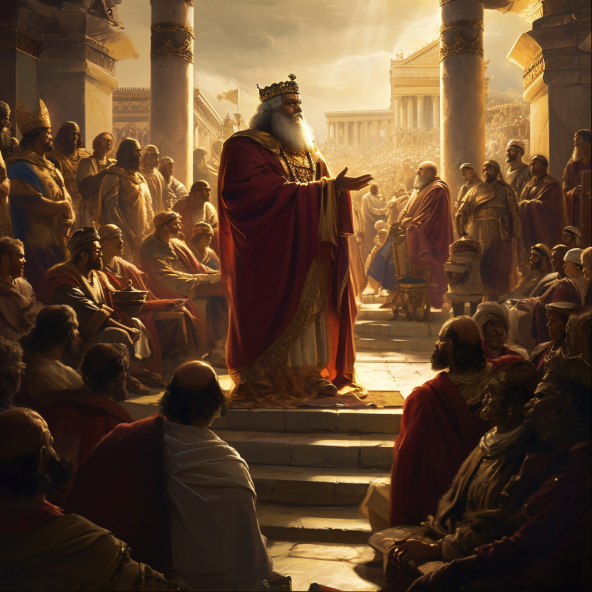
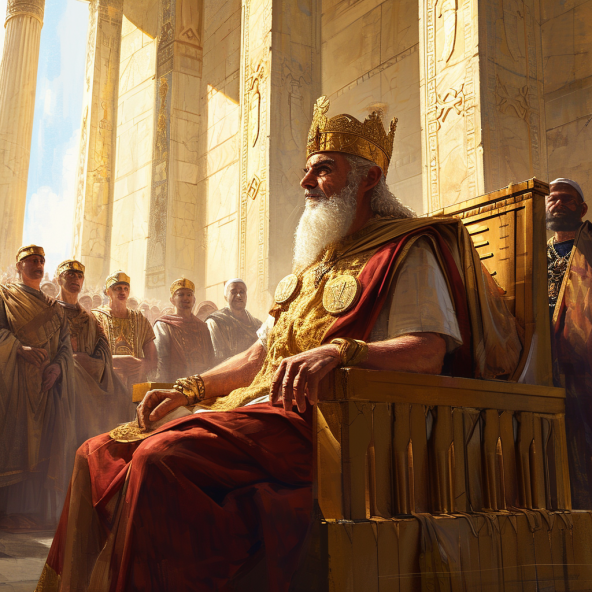
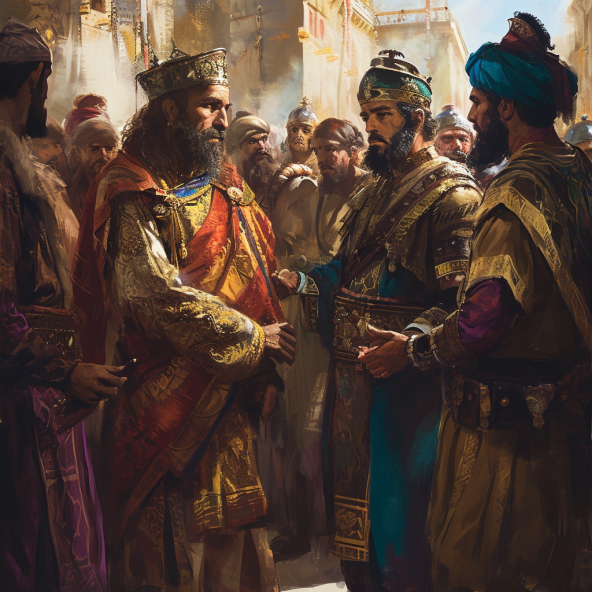
Solomon's dedication to building God's temple and the flourishing of Israel under his wise leadership

 Solomon Prepares to Build the Temple

Solomon Prepares to Build the Temple

2 Chronicles 2

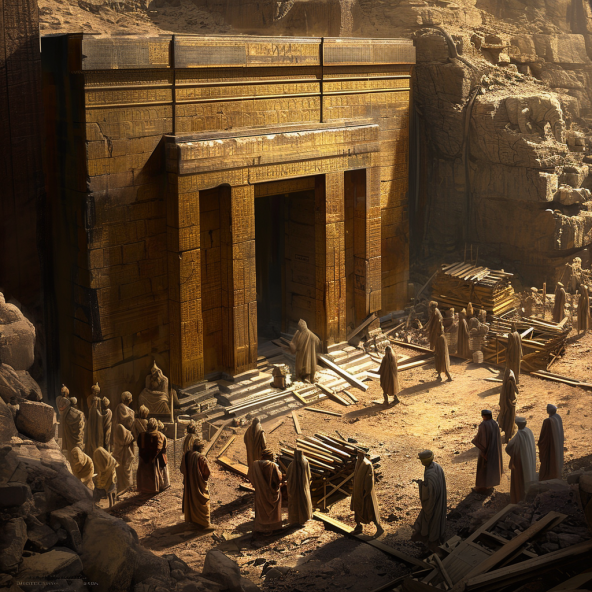
Solomon's commitment to fulfilling the divine mandate of building a dwelling place for God, marked by resource dedication and strategic planning

Building the Temple Begins

Building the Temple Begins

2 Chronicles 3

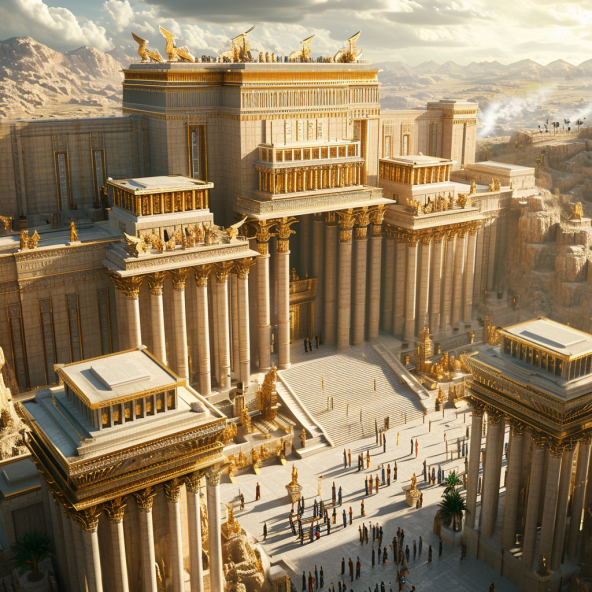
The significance of the temple as a symbol of Israel's covenant relationship with God, marked by meticulous construction and adherence to divine plans.

Furnishings of the Temple Completed

Furnishings of the Temple Completed

2 Chronicles 4

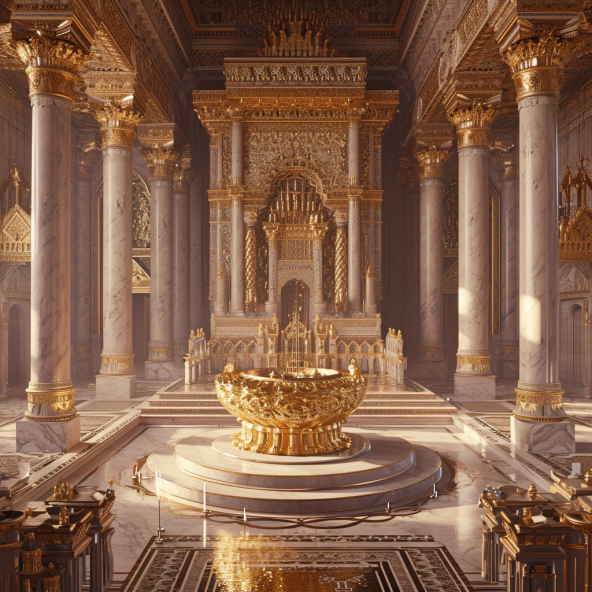
The meticulous completion of the temple's furnishings, reflecting the devotion to worship and the centrality of divine presence in Israel's religious life

Ark Brought to the Temple

Ark Brought to the Temple

2 Chronicles 5

The triumphant entry of the Ark into the temple, marking the fulfillment of Solomon's dedication and the establishment of God's presence in the sacred space.

Solomon's Prayer of Dedication

Solomon's Prayer of Dedication

2 Chronicles 6

Solomon's heartfelt prayer acknowledging God's covenant, seeking His presence, and emphasizing the temple as a place for divine communion

God's Glory Fills the Temple

God's Glory Fills the Temple

2 Chronicles 7

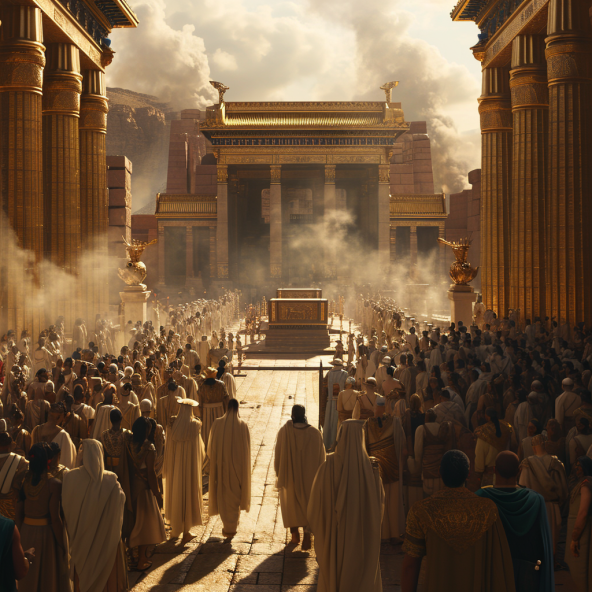
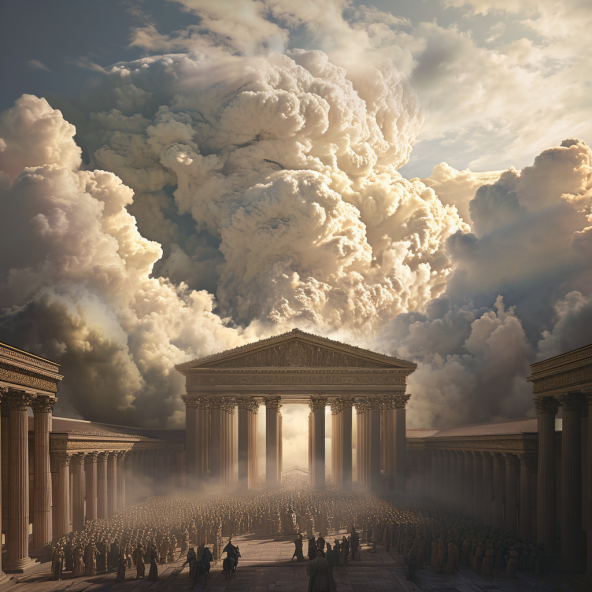
The manifestation of God's glory in response to Solomon's dedication, signifying divine approval and underscoring the sacred nature of the temple

Solomon's Achievements

Solomon's Achievements

2 Chronicles 8

Solomon's accomplishments in building and governance, contributing to the prosperity and stability of the Israelite kingdom

The Queen of Sheba's Visit

The Queen of Sheba's Visit

2 Chronicles 9

The Queen of Sheba's visit, affirming Solomon's renowned wisdom and the magnificence of his reign, with implications for international relations

Division of the Kingdom

Division of the Kingdom

2 Chronicles 10

The pivotal chapter detailing the division of the kingdom, marked by political and historical implications for Israel

Rehoboam's Reign in Judah

Rehoboam's Reign in Judah

2 Chronicles 11

Rehoboam's initial reign in Judah, marked by political and social dynamics that influence the kingdom's trajectory.

Egypt's Invasion and Repentance

Egypt's Invasion and Repentance

2 Chronicles 12

The chapter narrates Judah's lapse, the consequences of foreign invasion, and the subsequent repentance, emphasizing the interplay between obedience and divine mercy.

Abijah's Defense of Judah

Abijah's Defense of Judah

2 Chronicles 13

Abijah's defense of Judah against Israel, emphasizing the importance of faithfulness to God's covenant and the role of divine intervention in times of conflict.

Asa's Reign in Judah

Asa's Reign in Judah

2 Chronicles 14

Asa's reign characterized by spiritual reforms, the removal of idols, and a period of peace and prosperity in Judah.

Asa's Reforms and Renewal

Asa's Reforms and Renewal

2 Chronicles 15

Asa's ongoing reforms, emphasizing the renewal of the covenant and the commitment to worshiping God without the influence of idolatry

Asa's Alliance and Rebuke

Asa's Alliance and Rebuke

2 Chronicles 16

Asa's shift in strategy, forming alliances with foreign powers, and the prophet Hanani's rebuke highlighting the importance of reliance on God

Jehoshaphat's Righteous Reign

Jehoshaphat's Righteous Reign

2 Chronicles 17

Jehoshaphat's righteous reign, characterized by fidelity to God's ways and educational reforms that contribute to the spiritual and intellectual growth of the nation.

Jehoshaphat and Ahab's Alliance

Jehoshaphat and Ahab's Alliance

2 Chronicles 18

The narrative unfolds the consequences of Jehoshaphat's alliance with Ahab, highlighting the dangers of compromising with those who do not follow God's ways.

Jehoshaphat's Reforms and Justice

Jehoshaphat's Reforms and Justice

2 Chronicles 19

Jehoshaphat's governance marked by justice reforms, emphasizing the importance of righteousness in the administration of the kingdom.

Jehoshaphat's Prayer and Victory

Jehoshaphat's Prayer and Victory

2 Chronicles 20

The chapter recounts Jehoshaphat's prayerful dependence on God, leading to a miraculous victory over the enemy and highlighting the power of seeking divine guidance.

Jehoram's Reign in Judah

Jehoram's Reign in Judah

2 Chronicles 21

Jehoram's reign characterized by disobedience and idolatry, underscoring the spiritual decline and repercussions of straying from God's commands

Athaliah's Usurpation

Athaliah's Usurpation

2 Chronicles 22

The narrative unfolds the turbulent period of Athaliah's usurpation, highlighting the struggles faced by the legitimate heirs and the impact of unrighteous rulership.

Joash's Restoration

Joash's Restoration

2 Chronicles 23

Joash's restoration to the throne, emphasizing the significance of righteous leadership and the restoration of worship practices in Judah

Joash's Apostasy and Zechariah's Death

Joash's Apostasy and Zechariah's Death

2 Chronicles 24

The chapter unfolds Joash's oscillation between righteousness and apostasy, culminating in the tragic death of the prophet Zechariah due to the king's disobedience

Amaziah's Reign

Amaziah's Reign

2 Chronicles 25

Amaziah's reign characterized by a mix of military accomplishments and spiritual compromise, illustrating the complexities of leadership and the impact of unfaithfulness.

Uzziah's Prosperous Reign and Pride

Uzziah's Prosperous Reign and Pride

2 Chronicles 26

Uzziah's reign of prosperity tainted by prideful disobedience and the subsequent affliction of leprosy, emphasizing the dangers of arrogance in leadership.

Jotham's Righteous Reign

Jotham's Righteous Reign

2 Chronicles 27

Jotham's righteous reign characterized by spiritual devotion, military success, and economic prosperity, contributing to the well-being of Judah

Ahaz's Apostasy and Defeat

Ahaz's Apostasy and Defeat

2 Chronicles 28

Ahaz's reign marked by apostasy, foreign alliances, and military defeat, highlighting the destructive outcomes of turning away from God's guidance.

Hezekiah's Cleansing and Restoration

Hezekiah's Cleansing and Restoration

2 Chronicles 29

Hezekiah's reign marked by a fervent commitment to restoring worship, cleansing the temple, and renewing the covenant, bringing about spiritual revival in Judah.

Hezekiah's Passover Celebration

Hezekiah's Passover Celebration

2 Chronicles 30

Hezekiah's Passover celebration, emphasizing the importance of communal worship and the invitation for all of Israel to participate in the spiritual feast.

Hezekiah's Administrative Reforms

Hezekiah's Administrative Reforms

2 Chronicles 31

Hezekiah's administrative reforms, highlighting the importance of structured organization and provision for those dedicated to temple service

Sennacherib's Invasion and Hezekiah's Prayer

Sennacherib's Invasion and Hezekiah's Prayer

2 Chronicles 32

The narrative unfolds the perilous situation of Sennacherib's invasion and Hezekiah's fervent prayer for divine deliverance, underscoring the power of trust in God during times of crisis

Manasseh's Repentance and Restoration

Manasseh's Repentance and Restoration

2 Chronicles 33

Manasseh's journey from wickedness to repentance, emphasizing the possibility of divine restoration even after a period of waywardness.

Josiah's Reforms and Rediscovery of the Law

Josiah's Reforms and Rediscovery of the Law

2 Chronicles 34

Josiah's reign marked by extensive reforms, culminating in the rediscovery of the Law and a fervent commitment to renewing the covenant with God

Josiah's Passover and Death

Josiah's Passover and Death

2 Chronicles 35

Josiah's last acts of piety, including the celebration of the Passover, and the somber conclusion of his reign with his untimely death in battle

Judah's Final Years and Exile

Judah's Final Years and Exile

2 Chronicles 36

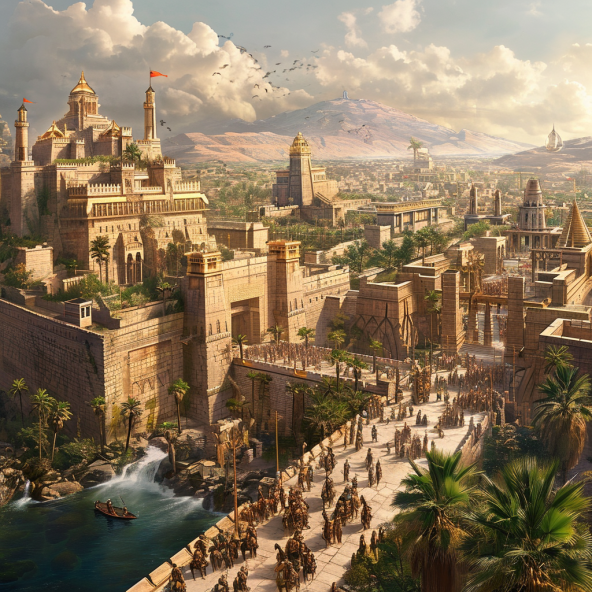
The chapter narrates the tragic decline of Judah, marked by idolatry, disobedience, and the Babylonian conquest, leading to the exile of the people